Home Maintenance
How to Prevent Frozen Pipes (and What to Do If One Bursts)
Mea Cara · November 2, 2026 · 5 min read
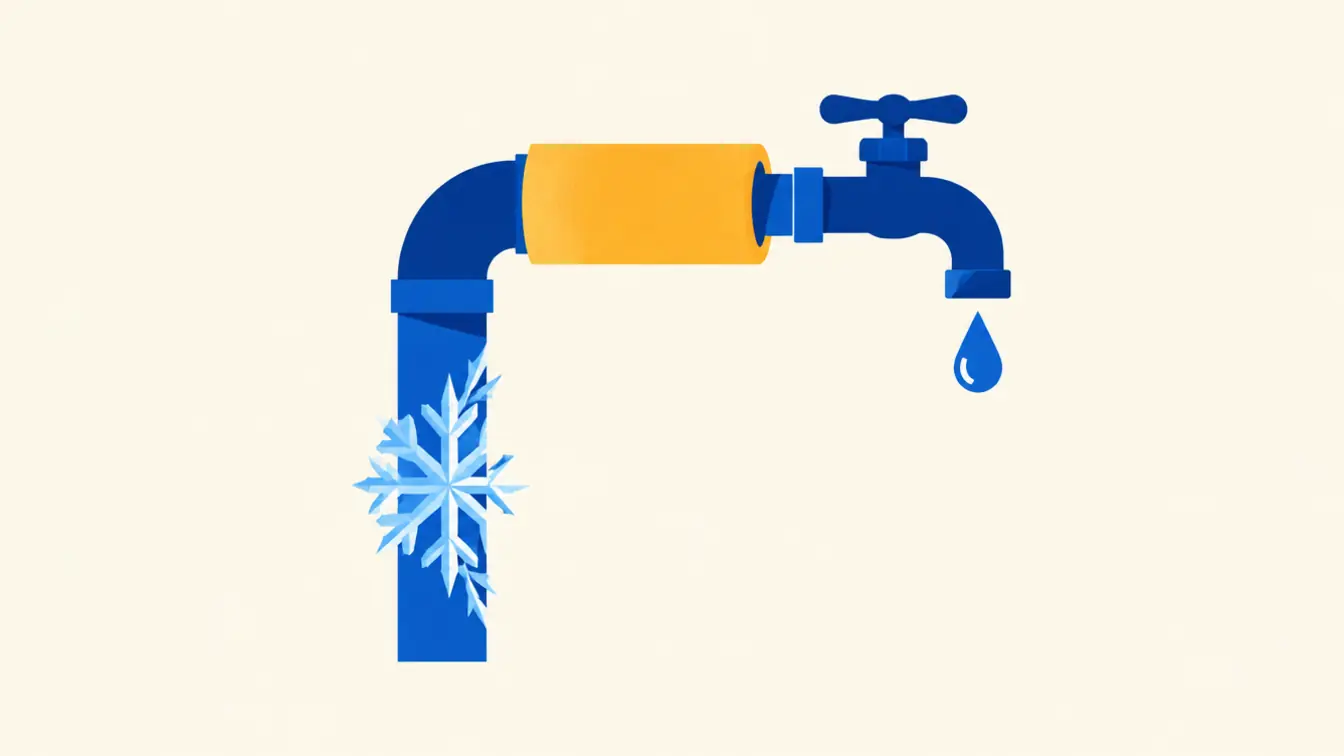
A frozen pipe is not the disaster. The disaster is the burst that follows when the ice thaws, which can put hundreds of gallons of water into a wall, a ceiling, or a finished basement in an afternoon. Insurers report frozen-pipe claims as some of the most expensive water losses they see, and nearly all of them trace back to the same handful of causes: an unheated space, a drafty wall, a hose left on an outdoor faucet, or a house left cold while nobody was home.
The good news is that the prevention is cheap and the warning signs are obvious once you know them. Here is what freezes, how to stop it, and what to do in the first ten minutes if a pipe lets go.
Which pipes freeze
Water freezes at 32°F, but a pipe inside a house rarely sees that unless it runs through somewhere the heat does not reach. The usual suspects:
- Outdoor faucets (hose bibs), especially with a hose still attached so the faucet cannot drain.
- Pipes in exterior walls, most often the kitchen sink or a bathroom on the north side of the house.
- Pipes in unheated spaces: the garage, the crawl space, an attic, an unfinished basement, or a three-season porch.
- Irrigation and pool lines that sit shallow in the ground.
- Any pipe in a house with the heat set too low or turned off while the owners are away.
Prevention, in order of payoff
- Disconnect the hoses and drain the outdoor faucets. Pull every hose, open the faucet, and if there is an interior shutoff valve for that line, close it and leave the outdoor tap open so it drains. A foam faucet cover is worth adding on faucets without a shutoff. This is the single step that prevents the most common freeze.
- Insulate exposed pipes. Foam pipe sleeves from the hardware store slide over pipes in the garage, basement, and crawl space in minutes. Where a pipe runs through an exterior wall you cannot reach, insulating and air-sealing the wall cavity from the basement or attic side helps.
- Seal the cold air out. A pipe freezes faster from a draft than from still cold air. Foam the gaps where pipes, wires, and dryer vents come through exterior walls, and close the crawl-space vents for winter.
- Keep the heat on, and even. Never set the thermostat below about 55°F, even when you are away. On the coldest nights, open the cabinet doors under the kitchen and bathroom sinks so warm room air reaches the pipes in the wall.
- Let a faucet drip on the worst nights. A pencil-thin trickle from the faucet farthest from where the water enters the house keeps water moving and relieves the pressure that actually bursts pipes. Use the cold side, and the hot side too if that line runs through a cold wall.
- Heat cable (heat tape) is the fix for a pipe that freezes every year. Buy one listed for the pipe material, follow the instructions exactly, and plug it into a GFCI outlet.
Know the shutoff before you need it
Find the main water shutoff now. It is usually where the water line enters the house: in the basement near the front wall, in a crawl space, in the garage, or near the water heater. Turn it closed and open once a year so it does not seize. Make sure everyone in the household knows where it is, and that nothing is stacked in front of it. When a pipe bursts, the difference between a wet floor and a ruined ceiling is how fast someone reaches that valve.
If a pipe freezes
The sign is a faucet that gives a trickle or nothing while others work. Leave that faucet open; as the ice melts, water needs somewhere to go. Then warm the pipe gently, working from the faucet end back toward the frozen section: a hair dryer, a heating pad wrapped around the pipe, towels soaked in hot water, or a space heater in the room. Never use a torch or any open flame. If you cannot find the frozen section, or it is inside a wall, call a plumber before it thaws on its own.
If a pipe bursts
Shut off the main water valve first, before anything else. Then turn off the electricity to any area where water is near outlets or appliances. Open the faucets to drain the system, then start moving water out and belongings up. Call a plumber, then your insurer. Photograph everything before you clean up.
Most homeowner policies cover sudden pipe bursts but not the slow damage from a leak you ignored, and some exclude damage in a house left unheated. A dated photo and a quick note of when you found it are what the adjuster will ask for.
Going away for the winter
A house left empty for more than a few days in freezing weather needs either the heat left at 55°F or higher with someone checking in, or the water shut off at the main and the lines drained. Many insurers require one or the other for an unoccupied house and will deny a freeze claim otherwise, so it is worth reading your policy. A leak sensor by the water heater and under the sinks will text you before a drip becomes a flood, and a smart thermostat will tell you if the furnace quits.
What to write down
Where the main shutoff is, and a photo of it. Where the interior shutoffs for each outdoor faucet are. The date you disconnected the hoses and drained the lines, so next year you know it got done. If a pipe has frozen before, which one and where, because it will try again. And your insurer's claims number, somewhere other than a drawer that might be underwater.
HavenBinder keeps all of that on the Emergency page, which you can share for free with a house-sitter or a neighbor so they can find the valve without you on the phone. It also watches the forecast and nudges you when a freeze is coming and the hoses are still on. It is free to start. This is one job on the fuller winterizing checklist, and if you have ever wondered whether you are overspending or underspending on the house, this is what maintenance really costs.
#frozen pipes #plumbing #winter #emergency