Appliances & Systems
Furnace Maintenance Before Winter: What You Can Do and What to Hire Out
Mea Cara · November 9, 2026 · 5 min read
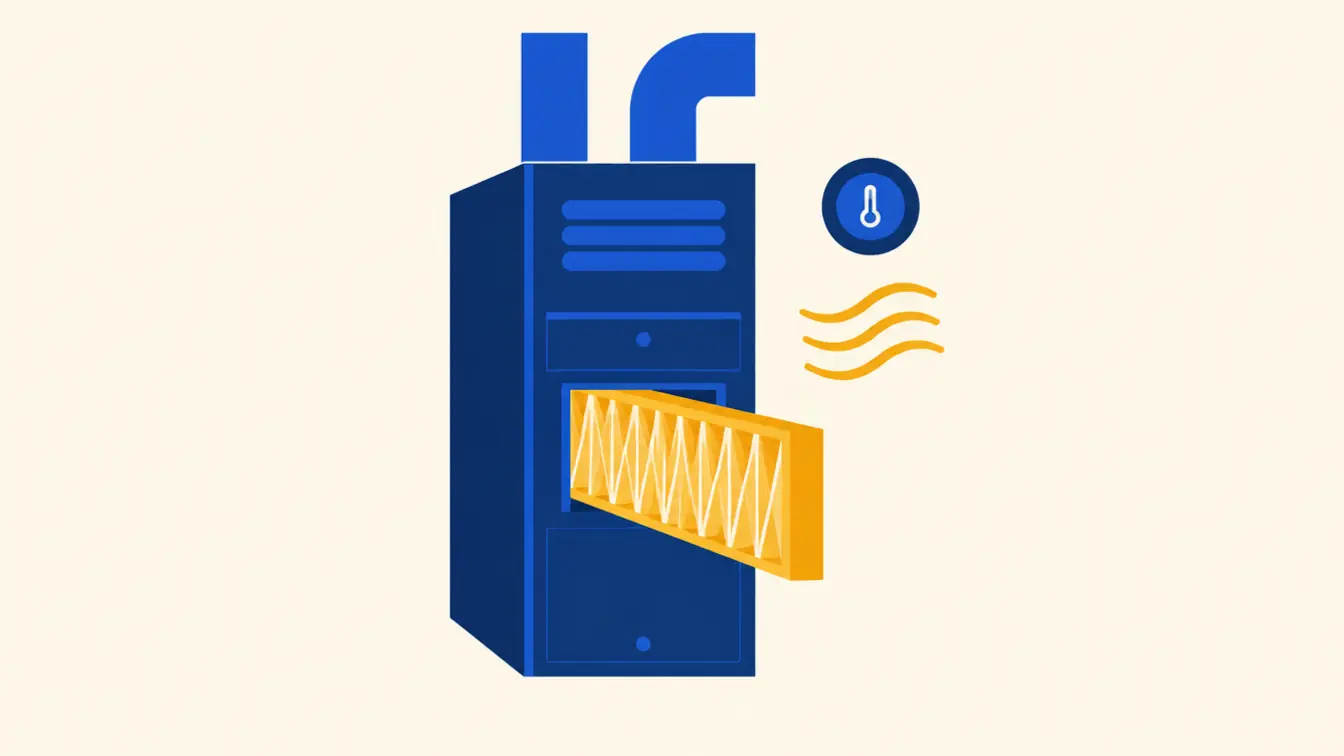
The furnace is the one appliance that picks its moment. It runs fine all of October, and then on the first night the temperature drops into the teens it quits, and so does every other neglected furnace in town, and the service company's next opening is Thursday. Nearly every emergency furnace call in December was a cheap, scheduled job in October.
Here is what a tune-up actually covers, what you can safely do yourself, the signs that something is wrong, and the few records that make the next repair faster and cheaper.
What you can do yourself
- Replace the filter. Pull the old one, note the size printed on its frame (something like 16x25x1), and slide the new one in with the arrow pointing toward the furnace, in the direction the air flows. A dirty filter is the leading cause of a furnace that overheats and shuts itself off. Check it monthly in winter; a one-inch filter usually needs replacing every one to three months, a four-inch filter every six to twelve.
- Clear the space around it. A furnace needs air to burn. Keep boxes, paint cans, and anything flammable at least three feet away, and never store solvents or gasoline in the furnace room.
- Check the vents and registers. Walk the house and make sure supply registers are open and not covered by rugs or furniture. Closing registers in unused rooms does not save money; it raises the pressure in the ducts and makes the blower work harder.
- Look at the outside vents. A high-efficiency furnace vents through PVC pipes on the side of the house. Make sure they are clear of leaves, nests, and, later, snow. A blocked exhaust shuts the furnace down, and a blocked intake can be worse.
- Check the condensate drain. That same high-efficiency furnace produces water that drains through a small hose or pump. If it is clogged, the furnace stops. A cup of vinegar down the drain line clears algae.
- Test the thermostat. Turn the heat up a few degrees and confirm the furnace lights within a minute or two. Replace thermostat batteries if it takes them.
- Test the carbon monoxide alarm nearest the furnace. If you do not have one on that level, this is the week to add it.
What a professional tune-up covers
An annual service visit usually runs somewhere in the range of $100 to $300 and takes about an hour. A good technician will:
- Inspect the heat exchanger for cracks, which is the safety reason to have the furnace checked at all. A cracked exchanger leaks combustion gases, including carbon monoxide, into the house air.
- Clean and inspect the burners, igniter or pilot, and flame sensor. A dirty flame sensor is behind a large share of "furnace lights, then shuts off" calls.
- Check the blower motor, belt, and capacitor, and clean the blower wheel if needed.
- Test the gas pressure, the safety limit switches, and the pressure switch.
- Check the venting and the draft, and look for rust or soot that points to a combustion problem.
- Measure the temperature rise across the furnace and compare it with the rating plate.
If the technician recommends a repair, ask them to show you the part. A legitimate cracked heat exchanger is visible with a camera; a furnace that is "too old" with no specific fault is a sales pitch. Get the finding in writing on the invoice.
Signs something is wrong
- Short cycling, meaning the furnace turns on and off every few minutes. Often a dirty filter or flame sensor; sometimes an oversized furnace or a failing limit switch.
- A yellow or flickering burner flame instead of a steady blue one. Shut it off and call; this can mean incomplete combustion.
- Rust, soot, or water around the furnace or the vent pipe.
- Rising gas bills with no change in weather or thermostat settings.
- A smell of gas. Leave the house and call the gas utility from outside.
- Banging or screeching that is new. A bang at startup can be delayed ignition; a screech is usually a bearing or belt.
Repair or replace
A gas furnace lasts about fifteen to twenty years. The commonly used rule is to replace when the furnace is past three-quarters of that life and the repair costs more than a third of a new one. A cracked heat exchanger on a furnace over ten years old almost always means replacement. If you are replacing, get three quotes, ask about the efficiency rating (a 95% AFUE furnace will cost more up front and less every month), and check whether your utility offers a rebate.
Buy filters in bulk once you know the size. A case of six at the start of the season means the monthly swap never waits on a store run, and the filter size written on the furnace in marker means nobody has to guess.
What to write down
The furnace brand, model, and serial number from the rating plate inside the front panel. The filter size and the date of each change. The install date, which is often on a sticker inside the cabinet, and the date of each service with what was found. The name and number of the company that serviced it. Where the gas shutoff is. And whether the furnace is still under warranty; many have a ten-year parts warranty on the heat exchanger, and some a lifetime one, that is worth nothing if you cannot find the paperwork.
HavenBinder gives the furnace its own page for exactly this: snap the rating plate (with Premium, the model and serial fill in themselves), the filter size shows up in Sizes & Specs ready to copy at the hardware store, the filter change repeats on a schedule, and a filed receipt or warranty that mentions its model or serial number links itself to the furnace automatically. It is free to start. The furnace is the first stop on the winterizing checklist, and the service history you build this way is the kind that pays you back when you sell.
#furnace #hvac #maintenance #winter